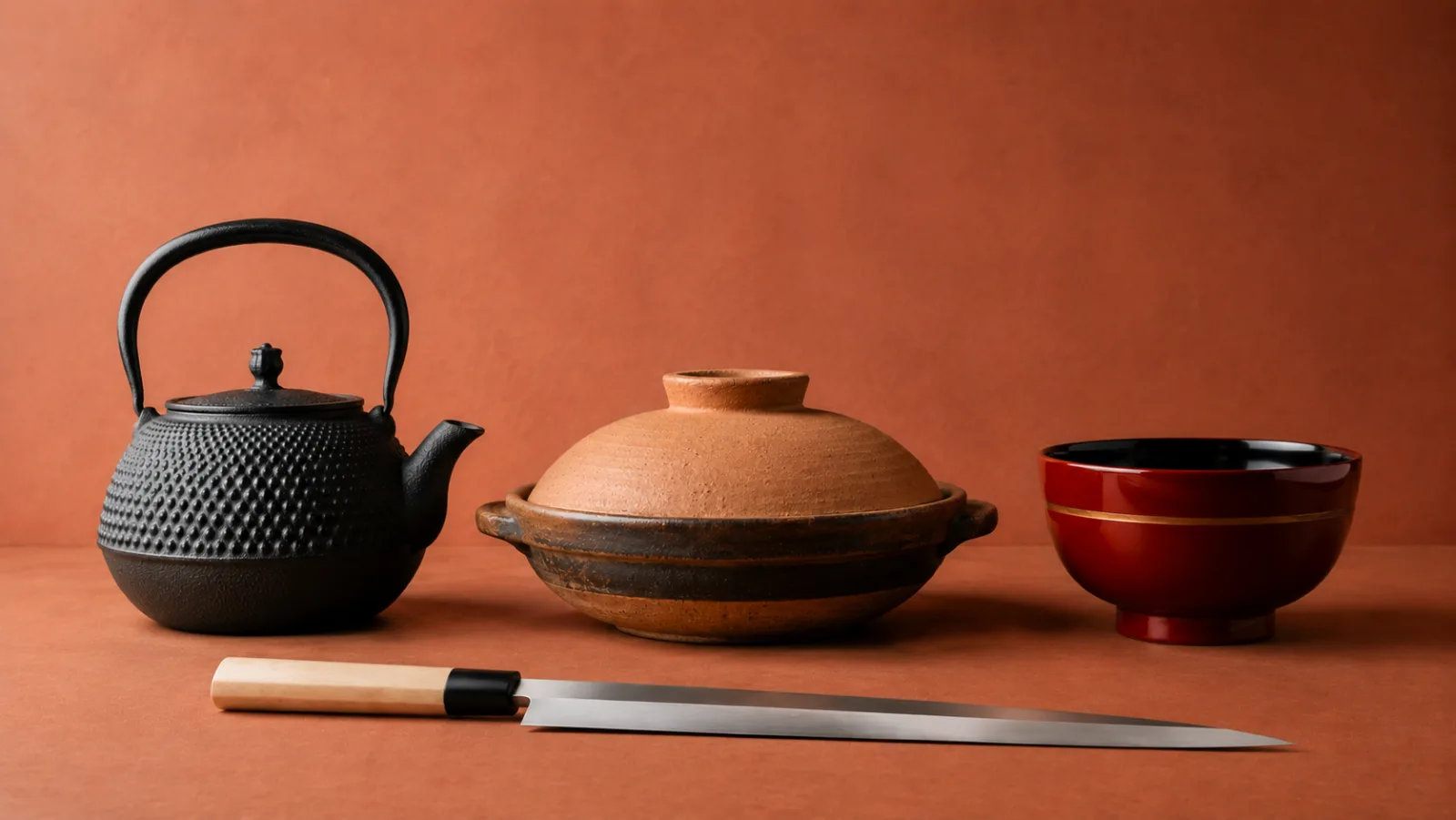
日本の工芸、その扱い方
The part the listing leaves out.
Japanese craft objects are sold worldwide with beautiful photographs of the outside and very little about what will destroy them. These guides cover the differences that cost people the piece — each one checkable, each one sourced.
Tetsubin or tetsu-kyusu?
Two Nambu cast iron vessels that look identical from outside. One boils water and gives you iron; putting the other on heat cracks its lining for good. You can tell them apart in one look.
The step before a new donabe cooks anything
Unglazed clay is porous. Used straight from the box it seeps, stains and holds odours — and the fix is twenty minutes and a bowl of leftover rice.
What destroys lacquerware
Dishwasher, microwave, sunlight. All of them normal things to do with tableware, all of them irreversible on urushi.
A single-bevel knife is made for one hand
Yanagiba, deba and usuba are ground on one side only. In the wrong hand the blade is not blunt, it is backwards — and the left-handed version is made to order.