Why a donabe does nothing on an induction hob
A donabe is made for a flame. On an induction hob most of them do not get warm at all — and that is physics, not a defect. It is the one incompatibility here that no amount of care or technique gets around, because it is decided before the pot is even lit.
Own something else Japanese? Check what will destroy it →
What the hob is actually doing
An induction hob heats by inducing an electric current in the metal base of the pan; the pan itself becomes the heater. It needs ferromagnetic metal — cast iron, or certain stainless steels — touching the surface. Fired clay conducts no such current, so no heat is produced in it. Hobs with pan detection will not power a zone they cannot detect a suitable pan on.
This is why the answer is not “turn it up” or “use a different setting”. There is no setting: the pot is not the wrong shape or the wrong size for the hob, it is the wrong material for the method. A gas flame or a radiant element heats the pot from outside; induction asks the pot to heat itself, and clay cannot.
The version that does work
Induction-ready donabe do exist. Bernal Cutlery’s care page makes room for them explicitly — its warning against electric and induction hobs is prefaced “unless IH specified” — and the Japanese term for them is a common enough search that it autocompletes. The construction is the obvious one: metal bonded into the base so the field has something to act on. What you cannot do is convert an ordinary donabe, and a listing that says only “donabe” is describing the ordinary kind.
Where to look
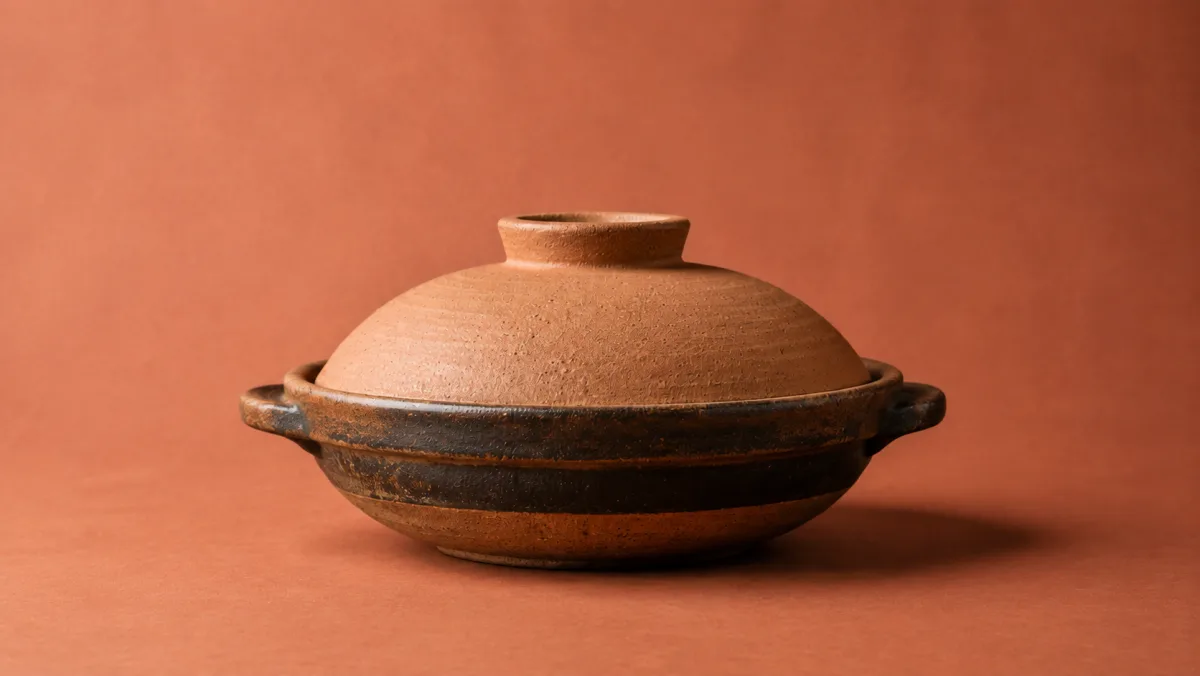
If you cook on induction, the specification you need is stated on the pot, not inferred from the pictures: look for an explicit induction or IH marking, or a visible metal disc in the base. A listing that says only “donabe”, however traditional the photographs, is describing the flame kind.
There is no shop link on this page. Recommending a pot here would mean recommending one whose base construction we cannot check from a listing — which is the exact failure this page is about. The two care guides below cover the pot once you own it.
SourcesThe other guides
Agarwood: the fake has a tell
The scent exists because the tree was infected. Uninfected wood is pale and light — whatever was added.
What a whetstone grit number does not tell you
There is no dominant standard behind the number. Two #1000 stones can cut differently.
The board decides how long the edge lasts
Glass dents, rolls and chips edges rapidly. Wood is self-healing — but grain matters more than "hardwood".
Santoku, gyuto, bunka, nakiri — and which is handed
Two of these are the same knife. And a nakiri suits either hand; the usuba it resembles does not.
Washi: what the word covers
JIS defines it — and the definition says most washi today is machine-made from chemical pulp.
A matcha whisk is one piece of bamboo
Carved from a single piece, so a snapped tine is not a repair. The tine count is a spec, not a score.
Goat hair or synthetic, for a Kumano brush
Not a quality ladder. Natural hair holds powder; synthetic is built for cream and liquid.
“Ceremonial grade” is not a standard
ISO and Japanese labelling define how matcha is made. Neither defines a grade.
A single-bevel knife is made for one hand
Ground on one side only. The wrong side does not cut badly — it does not work.
White steel or blue: which carbon steel
Blue holds an edge longer and is harder to sharpen. Which is better depends on how often you sharpen.
Rust or patina: which one are you looking at
One protects the blade, the other eats it. Scrubbing the wrong one leaves the knife worse off.
What HRC on a knife listing buys you
Western knives sit at 52–58 and 20–22°; harder steel is what permits 15–18°. Higher is a different bargain.
A chipped knife: cause, and what repairs it
Repair is subtraction — grind past the chip on a coarse stone, then work back up the grits.
Giving a knife: the belief, and the coin
A gifted knife is said to sever the relationship. The custom is that the recipient hands back a coin.
The handle: porous, replaceable, sometimes handed
Friction-fitted, not bonded — so it can be replaced. And a D-shaped handle is made for one hand.
Mould on a bamboo steamer, and the answer English guides skip
The usual fix starts by soaking it. A seiro maker calls soaking strictly forbidden.
What destroys lacquerware
Dishwasher, microwave, sunlight. All normal, all irreversible on urushi.
Is urushi safe to eat from?
Uncured urushi gives most people a rash. Cured, reactions are possible but less common.
Urushi and bacteria: what was actually measured
A prefectural institute put eleven lacquer films through JIS Z 2801. Most came back undetectable.
Is a Damascus knife real? The word changed
The original ceased production around 1900. Since 1973 the word has meant pattern welding — decoration.
What a donabe is actually doing
It conducts heat badly. That is the product — and it is also why it cracks.
The step before a new donabe cooks anything
Unglazed clay is porous until rice starch seals it — one simmer, once.
What is actually in a kintsugi kit
Real urushi cures in a humid box over days to weeks. A kit that sets in an hour is something else.
Eating from a kintsugi repair: what actually decides it
Not urushi against epoxy. Whether the material states food-contact compliance.
Japanese chopsticks: the point, and two gestures
Pointed where Chinese ones are blunt. And two ordinary gestures read as funeral rites.
Sumi or India ink: the binder decides
Sumi is soot held by animal glue. India ink needs no binder and dries waterproof on its own.
Porcelain and the dishwasher: where is the pattern
The body is impermeable. It is the decoration that is exposed — and you can feel which kind it is.
Tetsubin or tetsu-kyusu?
One boils water and gives you iron. Putting the other on heat cracks its lining for good.
Rust inside an iron kettle: the fix people look for is the damage
The spots appear in the first week. The makers’ association says do not take them off.
How much iron does an iron kettle actually give you?
The form is settled by a 2003 paper. The amount is not settled by anything.